FRC Team 1403 Cougar Robotics: Mechanical Captain
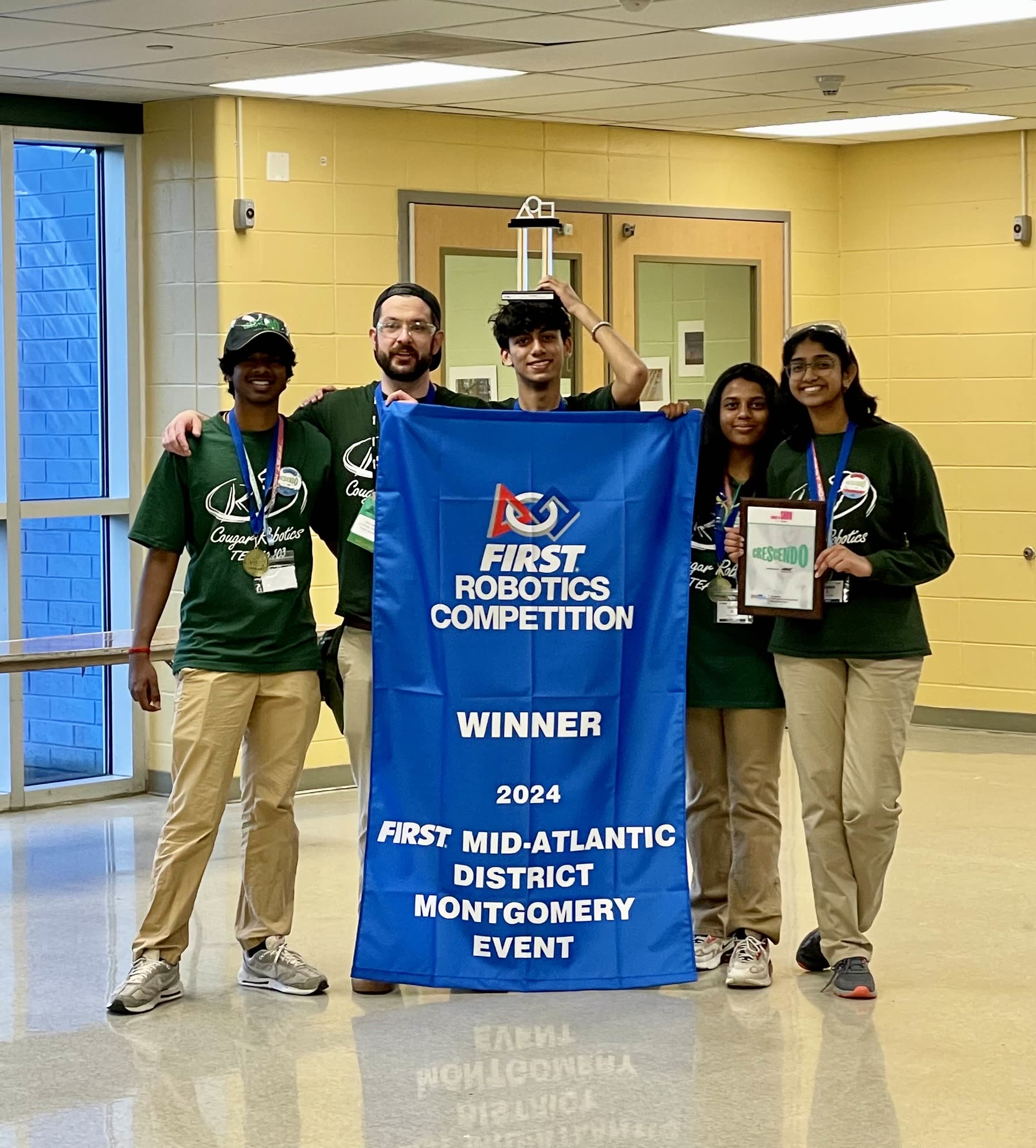
Directed a 15-member student team through the design, manufacturing, and competition of an FRC robot each season, earning three district-level awards including the Regional Chairman's Award.
- Role
- Mechanical Captain, Robot Operator
- Timeline
- Sept 2021 – Apr 2025
- Status
- Completed
- Stack
- CAD, Lathe, Mill
Overview
FIRST Robotics Competition (FRC) is a high school robotics program in which teams are given six weeks each January to design, build, and program a competition robot for a brand-new game revealed at the start of the season. Every team works from the same reveal and the same stop-build date, so the robot that rolls onto the field at the first competition is essentially the version the team is stuck with, aside from minor pit repairs between matches.
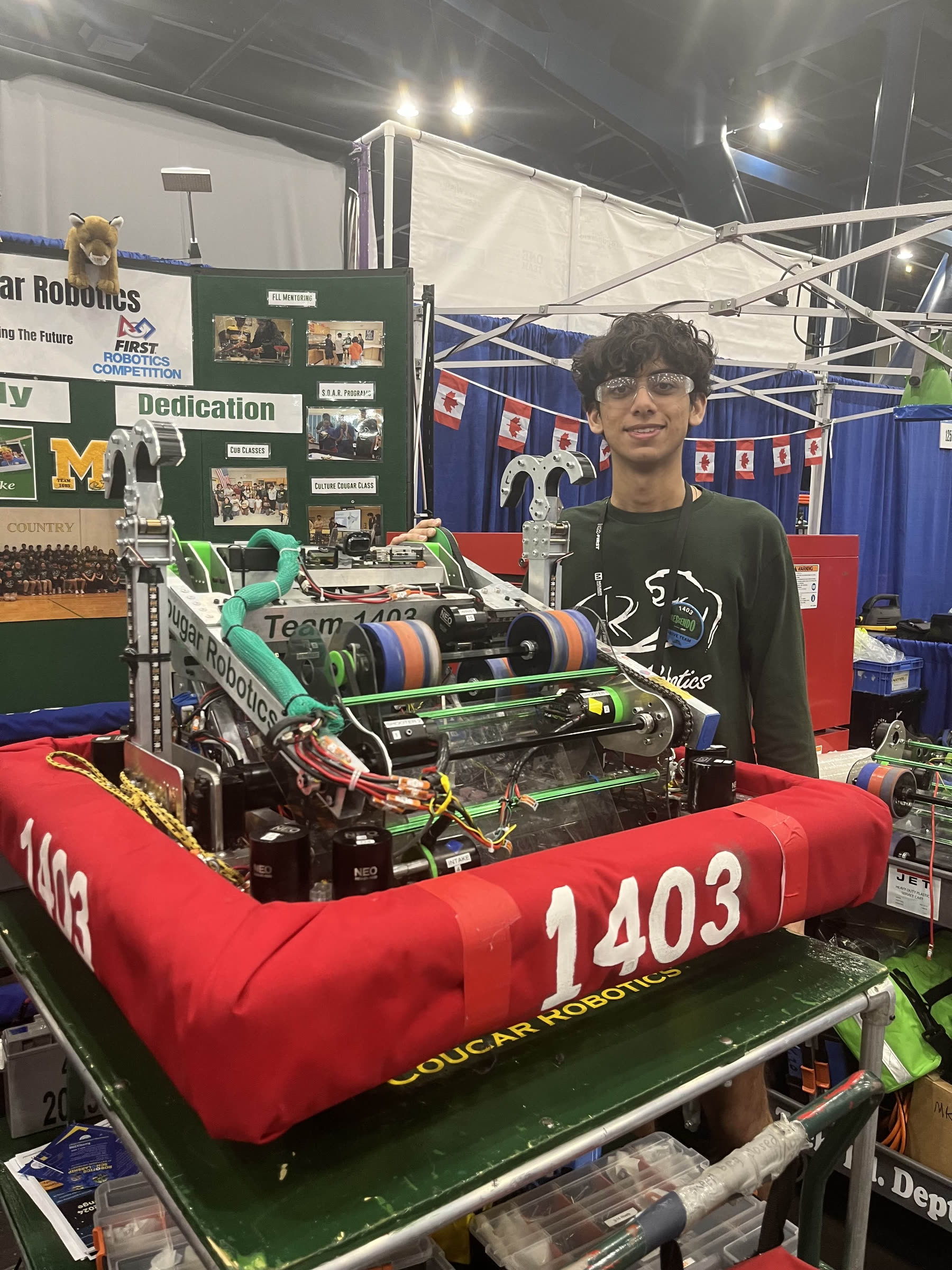
I competed with FRC Team 1403, Cougar Robotics, for four years, serving as Robot Operator during matches and ultimately as Mechanical Captain. The team competes in the FIRST Mid-Atlantic District, split across mechanical, electrical, programming, and business subteams, with district-level results in a given season determining whether the team advances to state and world championship events.
My Role
As Mechanical Captain, I directed a 15-member team through the mechanical design, manufacturing, and assembly of each season's competition robot. That meant setting build priorities, coordinating the mechanical subteam's work against the six-week season clock, and mentoring underclassmen on CAD and shop skills.
I ran weekly build-priority meetings to decide which subsystems got CAD, fabrication, and assembly time first, and split the subteam into smaller groups assigned to specific subsystems (drivetrain, intake, and climb, for example) so multiple mechanisms could move through the shop in parallel instead of queuing behind each other on a single design.
Mentoring was hands-on: I paired each new member with an upperclassman lead and walked them through CAD fundamentals and lathe/mill safety before they worked on competition parts unsupervised, which is also where most of the team's institutional shop knowledge got passed down season to season.
I also competed as a Robot Operator, running the robot directly during qualification and elimination matches, coordinating with the drive coach to translate match strategy into on-field execution, and logging mechanical issues between matches so the pit crew could triage repairs against the clock.
Technical Approach
Used CAD modeling to design and prototype 100+ robot parts, including full subsystems, translating each year's game strategy into buildable mechanisms within the season's time constraints.
Oversaw the manufacturing and assembly of 500+ aluminum robot parts using shop tools including lathes and mills, and instituted process changes on the mechanical subteam that reduced manufacturing and assembly time by 20%.
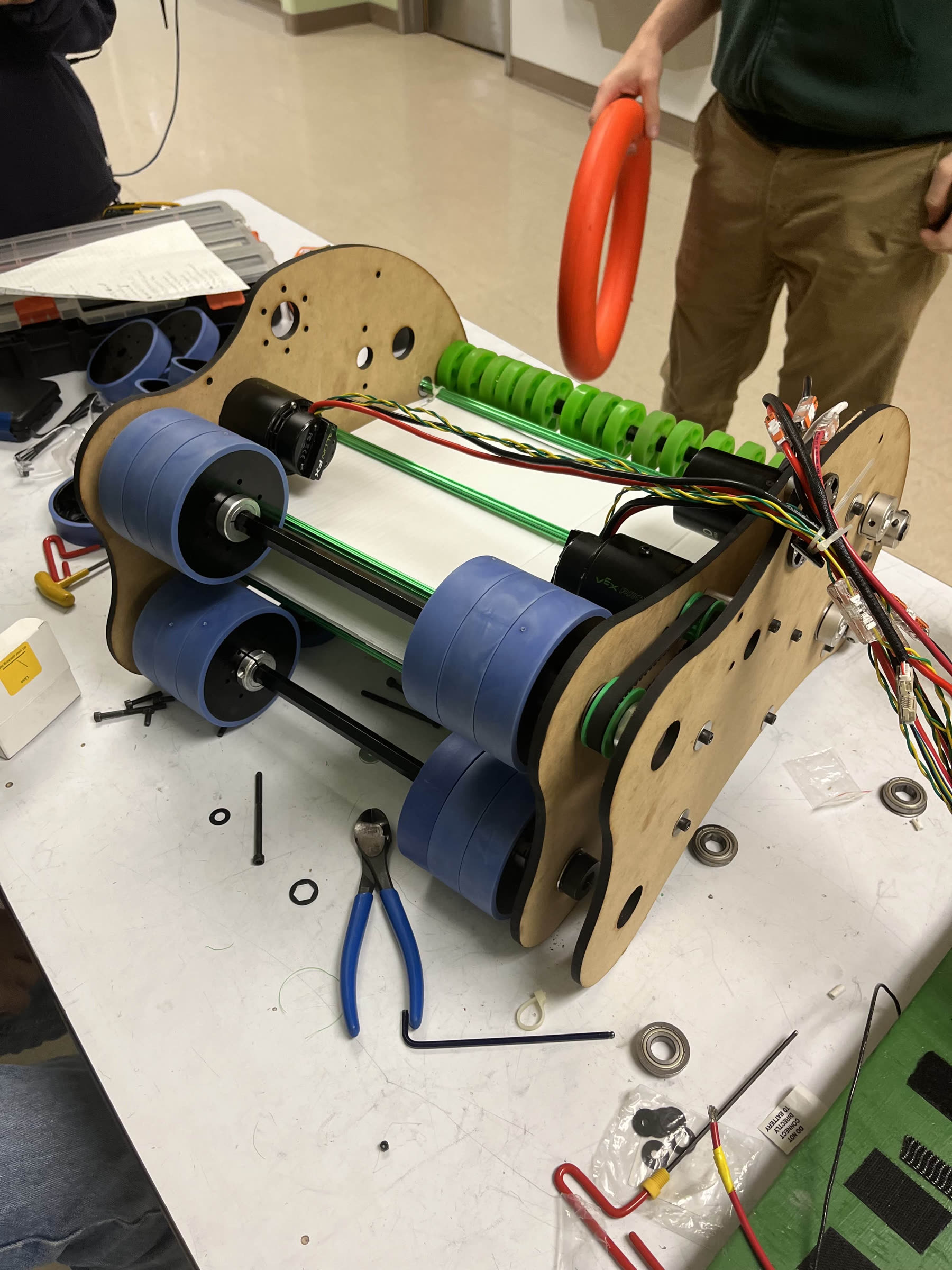
The 2024 CRESCENDO robot's note shooter/intake is a representative example of that design-to-build pipeline. The game required picking up floor notes and launching them into a speaker from range, so the mechanism needed compliant intake wheels to control the note on pickup and a set of flywheels to accelerate it back out. Before committing aluminum stock and shop time to it, we laser-cut a wood bench prototype to validate the roller spacing, belt routing, and flywheel geometry against the actual game piece, then bolted that same prototype onto the robot to test it under real match conditions.
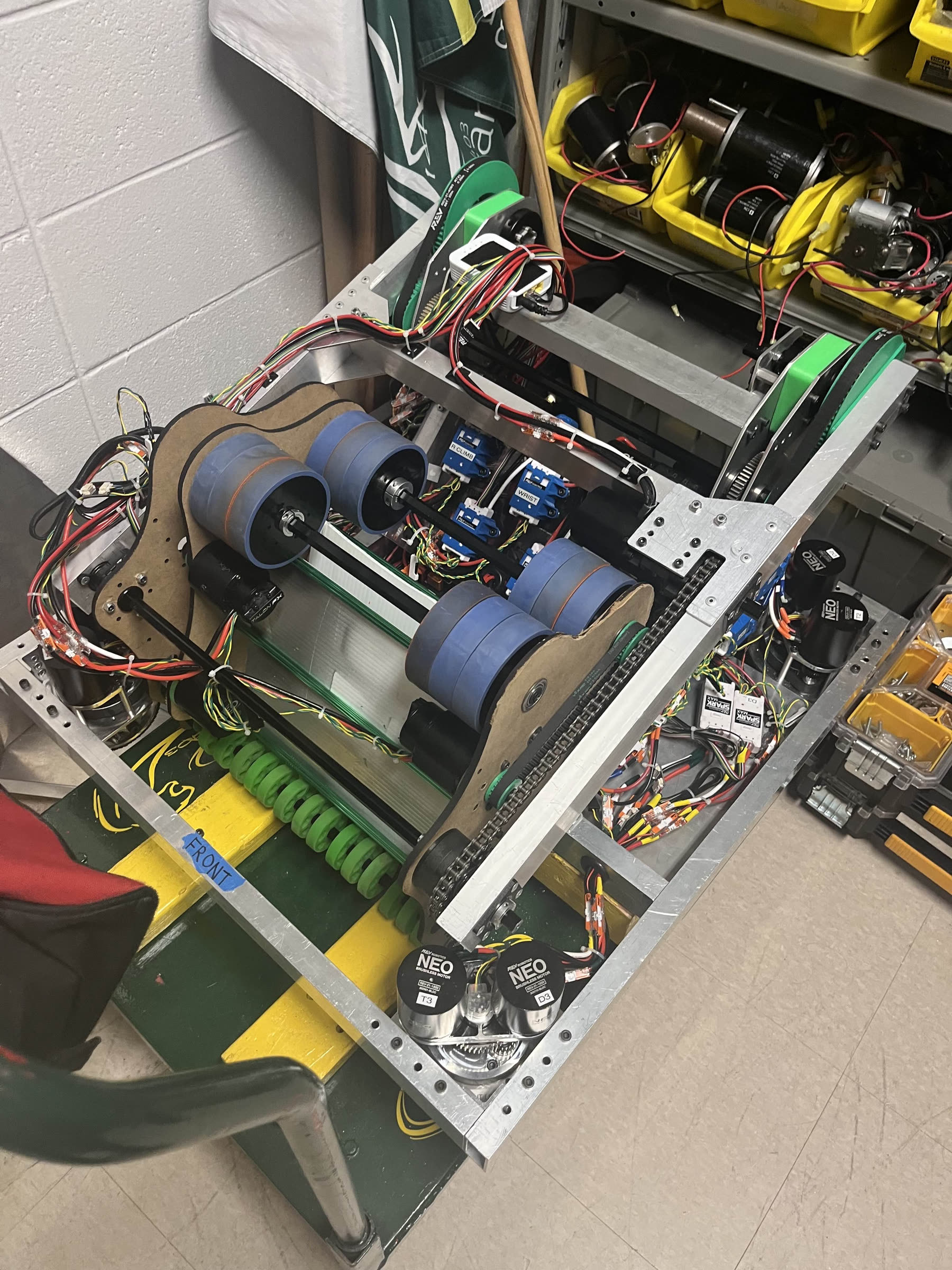
Once on-robot testing confirmed the mechanism held up under real match conditions, the mechanical subteam finalized it in aluminum, wired it with brushless motors and controllers, and integrated it into the robot's superstructure alongside the wrist and climb mechanisms. That's the same manufacturing pipeline behind the 500+ parts and 20% time reduction above, run on a single subsystem.
Challenges
Balancing an ambitious mechanical design scope against a fixed six-week build season and limited machine-shop capacity meant tightening the handoff between design and manufacturing.
The 20% reduction in build and assembly time came from restructuring how the subteam sequenced CAD release, part fabrication, and assembly, not from just working faster. Under the old process, we released an entire subsystem's CAD at once, which meant the lathe and mill sat idle whenever one late part held up the rest of the release. Switching to releasing individual parts to the shop as soon as each was finalized kept both machines running instead of waiting on the slowest part in a subsystem.
We also pre-staged raw aluminum stock, cutting it to rough length ahead of each build weekend, so machinists weren't spending shop time on material prep before they could even start a cut. And we ran a shared build-priority board that ranked parts by which subsystem was furthest behind schedule, so whoever was next up on a machine always knew what to run rather than defaulting to whatever part happened to be sitting in front of them.
Outcome
Directed the team to three district-level awards over four seasons, including the FIRST Regional Chairman's Award, the program's most prestigious honor. It recognizes the team that best embodies FRC's mission both on and off the field.